Three Hours in Cairo
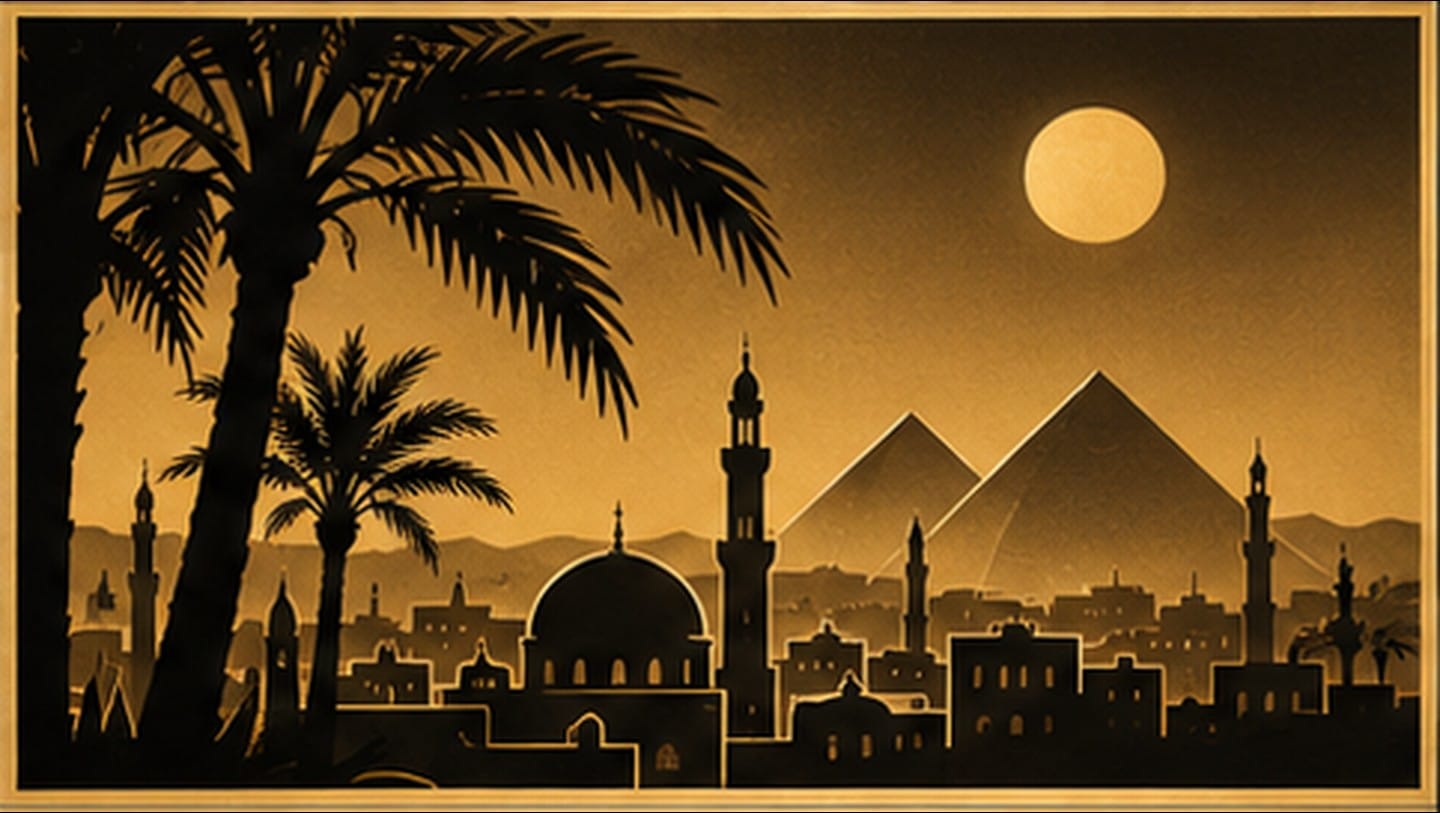
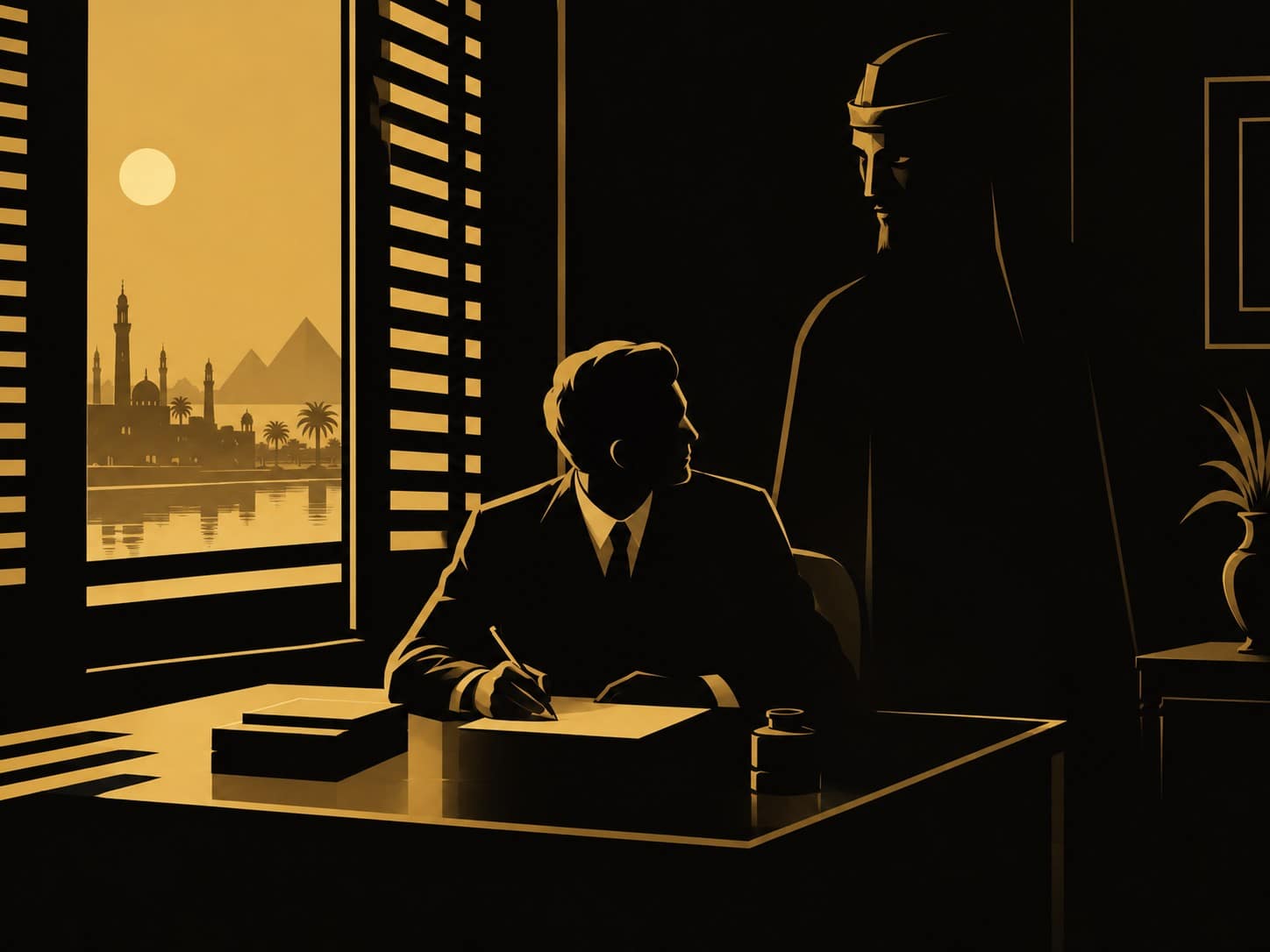
It’s noon on April 8, 1904, in Cairo. A young Englishman sits at a writing table in the drawing room of a rented ground-floor flat. He’s on his honeymoon. The shutters hold back the Egyptian sun, and the room is quiet except for the scratch of a pen.
Then, by his own account, a voice starts talking behind his left shoulder.
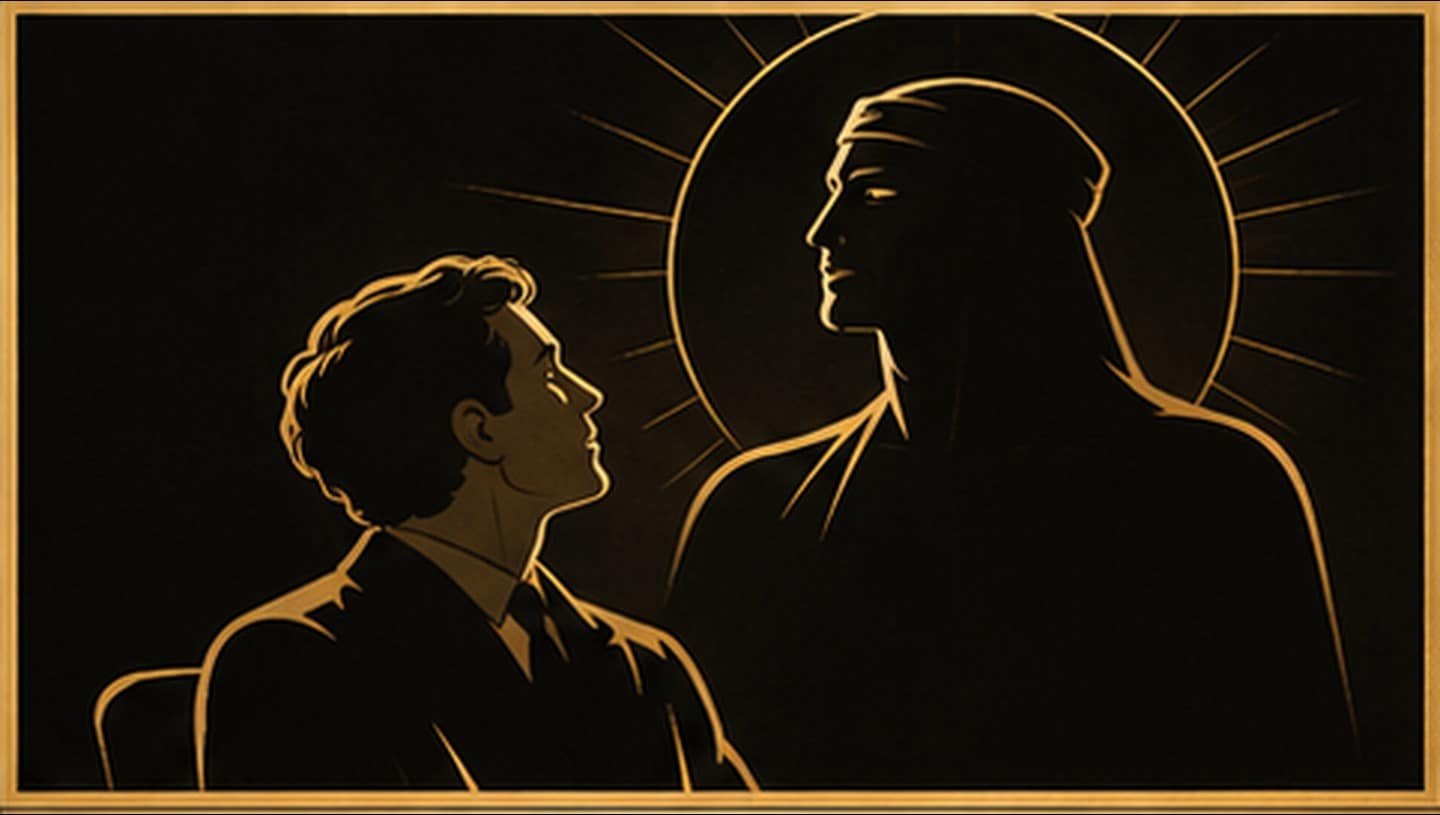
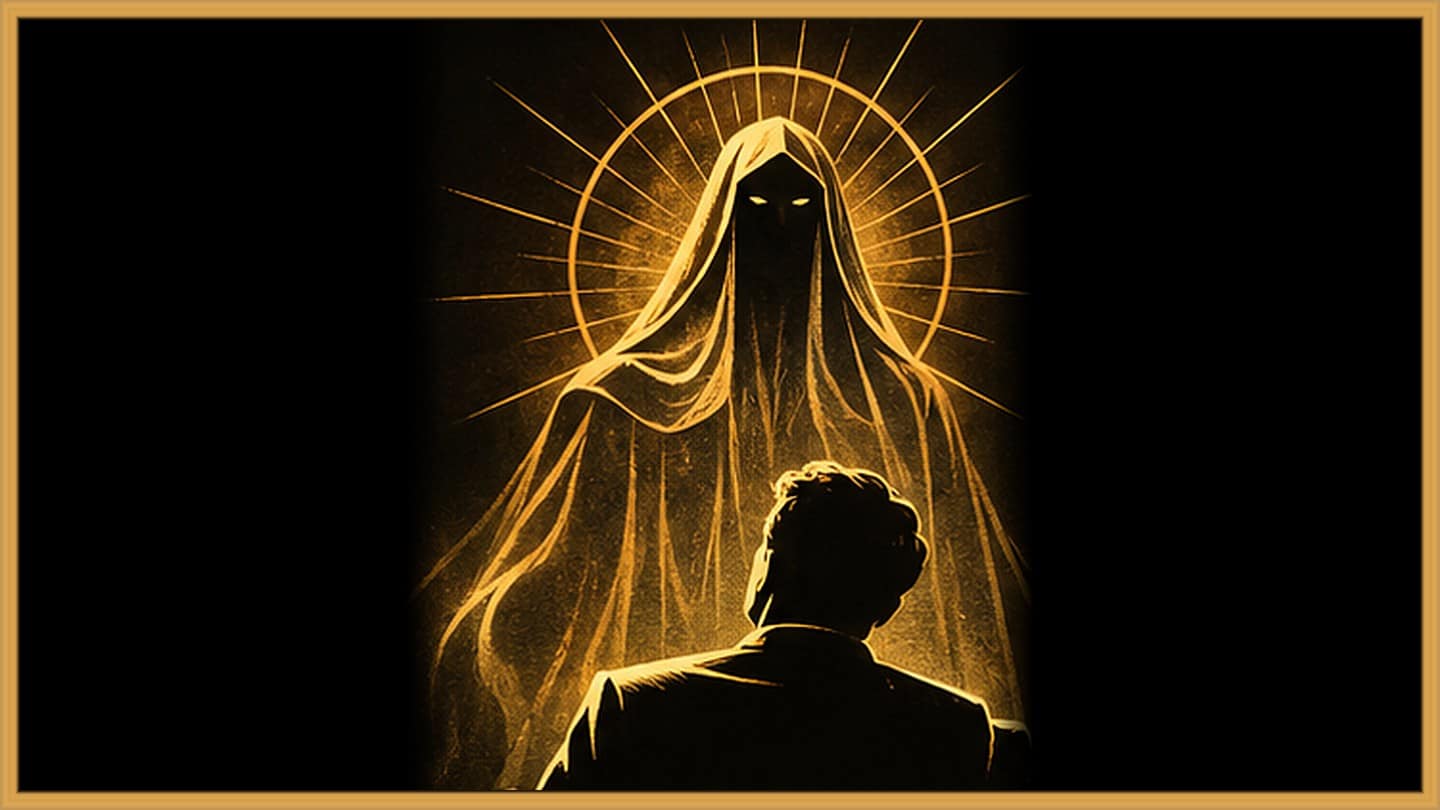
He’d later describe it as coming from the far corner of the room, a voice “of deep timbre, musical and expressive, its tones solemn, voluptuous, tender, fierce or aught else as suited the moods of the message.” He said it had no accent at all. He didn’t turn around and see a man, exactly, but he got a “strong impression” of one: tall, dark, in his thirties, “with the face of a savage king, and eyes veiled lest their gaze should destroy what they saw.” (Aleister Crowley, The Equinox of the Gods, ch. 7.)
For one hour he wrote as fast as the voice could talk. Then it stopped. The next day at noon, it came back. And the day after that. Three days, three hours, three chapters.
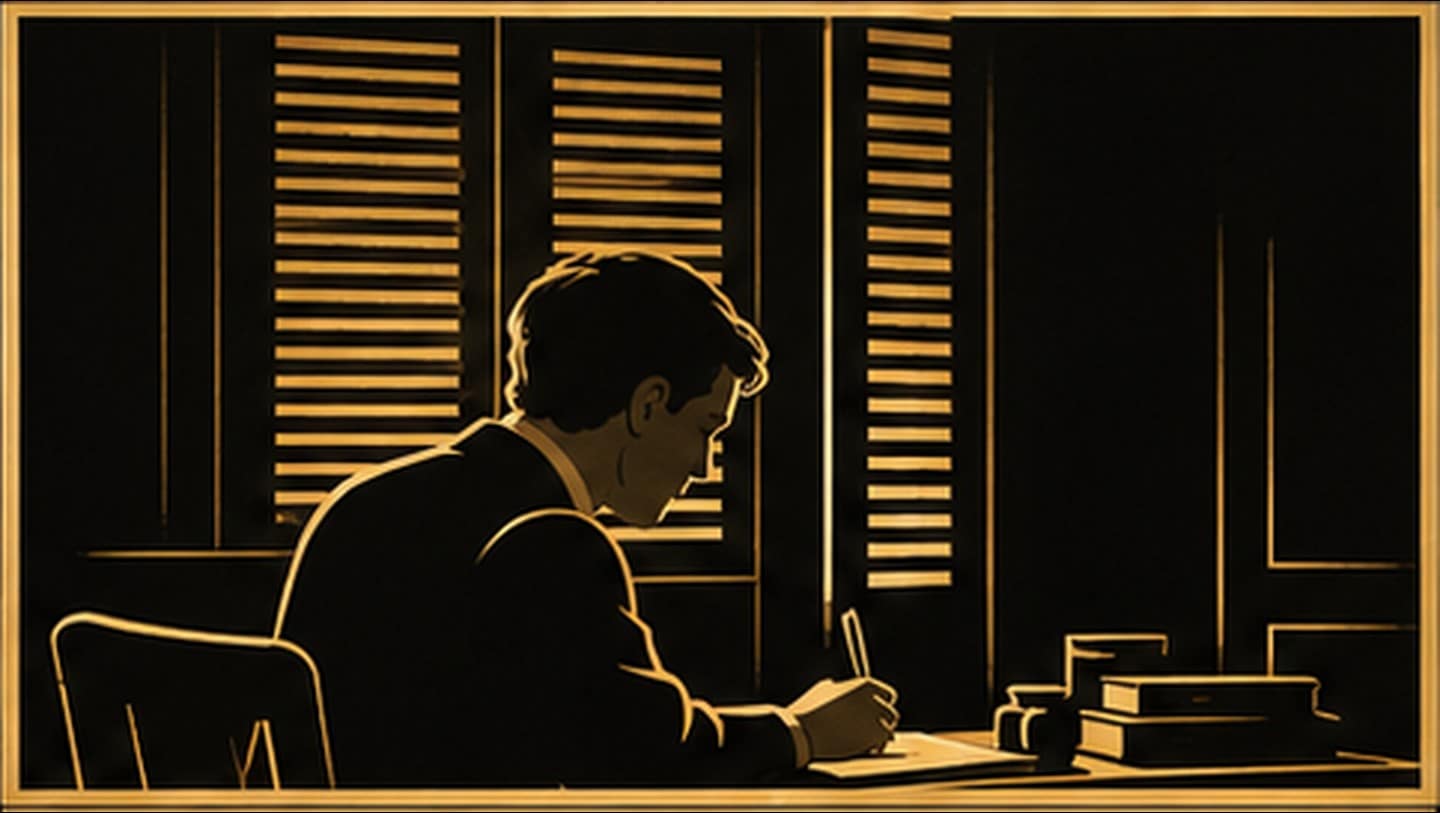
The Englishman was Aleister Crowley. The voice called itself Aiwass. The book was Liber AL vel Legis, The Book of the Law. And the claim riding on top of it all was enormous: that humanity had just crossed a threshold into a brand-new spiritual age. Crowley called it the Aeon of Horus.
The Honeymoon That Turned Into a Revelation
To get to April 8th, you have to back up a few weeks.
Crowley had married Rose Edith Kelly in 1903. By every account, including Crowley’s, Rose had no interest in magic. That matters for this story, because she’s the one who started it.
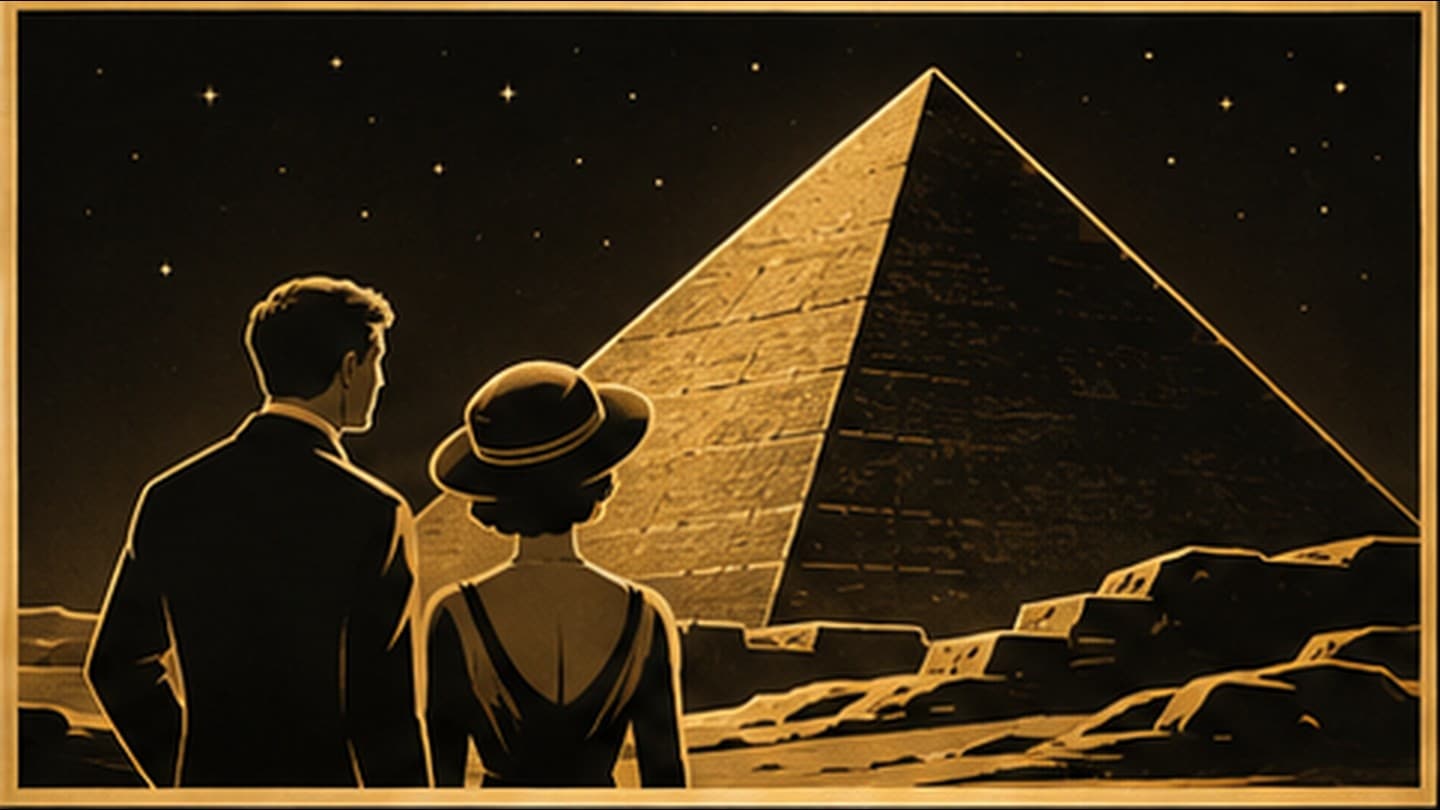
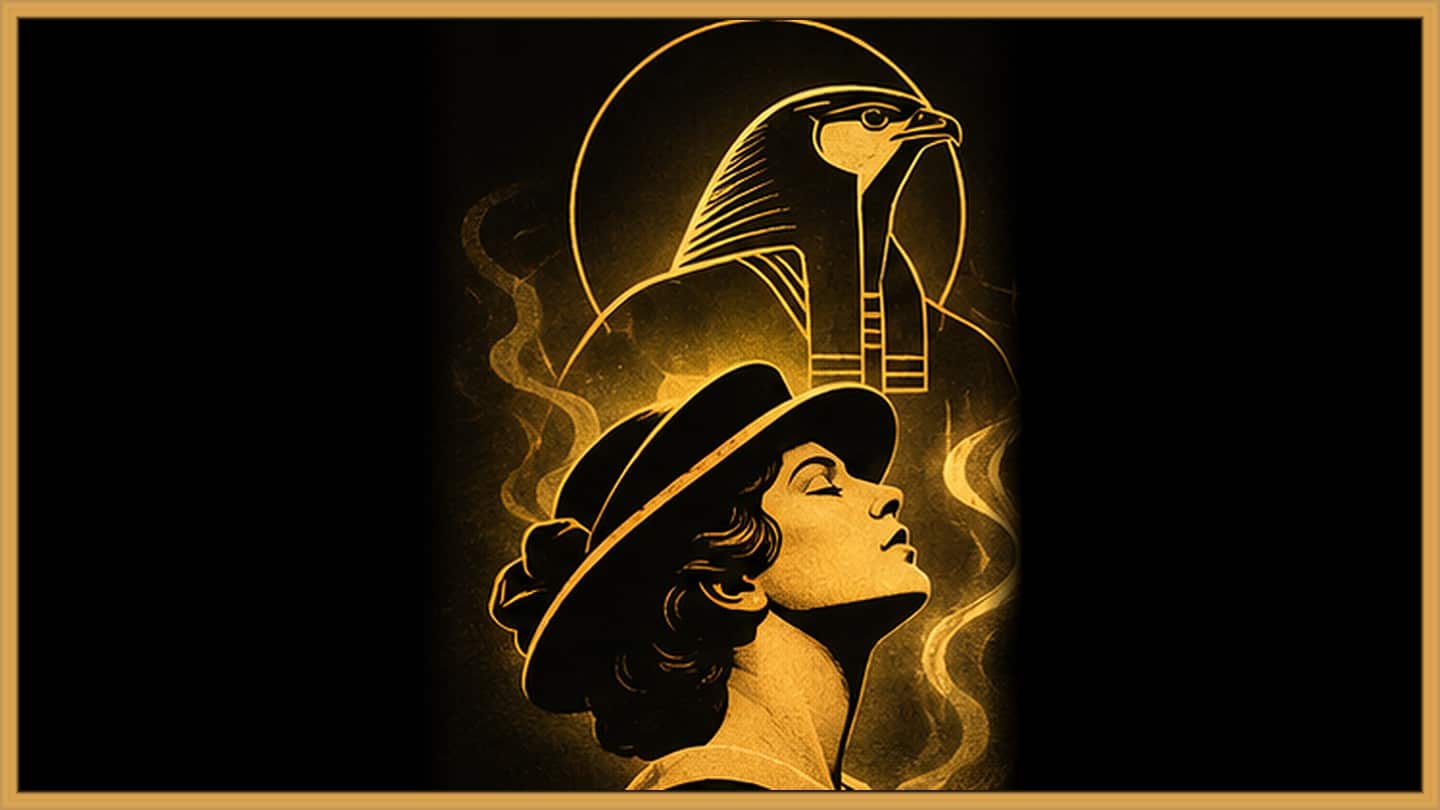
According to Crowley’s version in The Equinox of the Gods, in March 1904 the couple spent a night in the King’s Chamber of the Great Pyramid, where he performed a ritual to show her the sylphs, the spirits of air. She didn’t see any. But a couple of days later in Cairo, Rose fell into what looked like a light trance and kept repeating, “They’re waiting for you!” On March 18th, she named who was waiting: Horus, the falcon-headed god of Egypt.
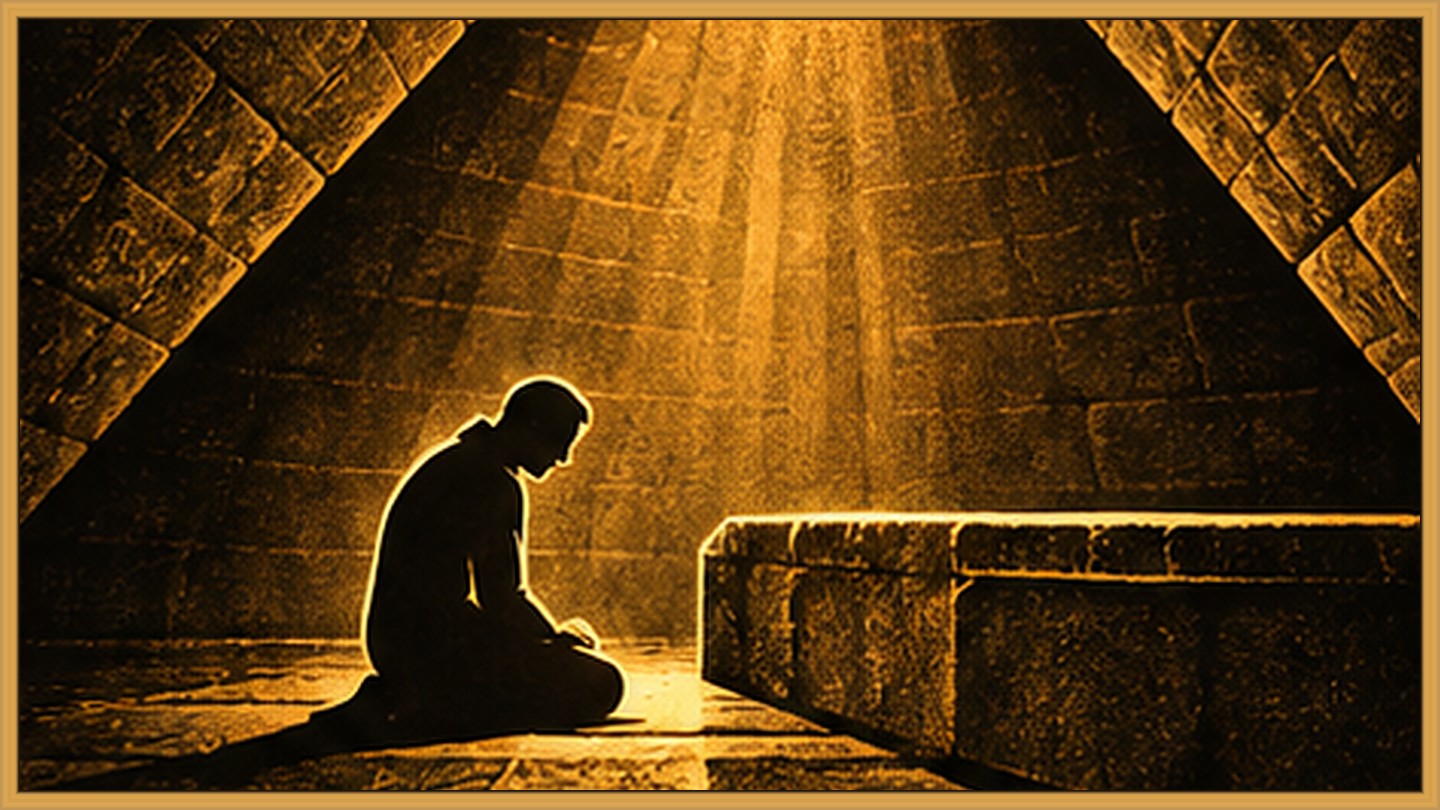
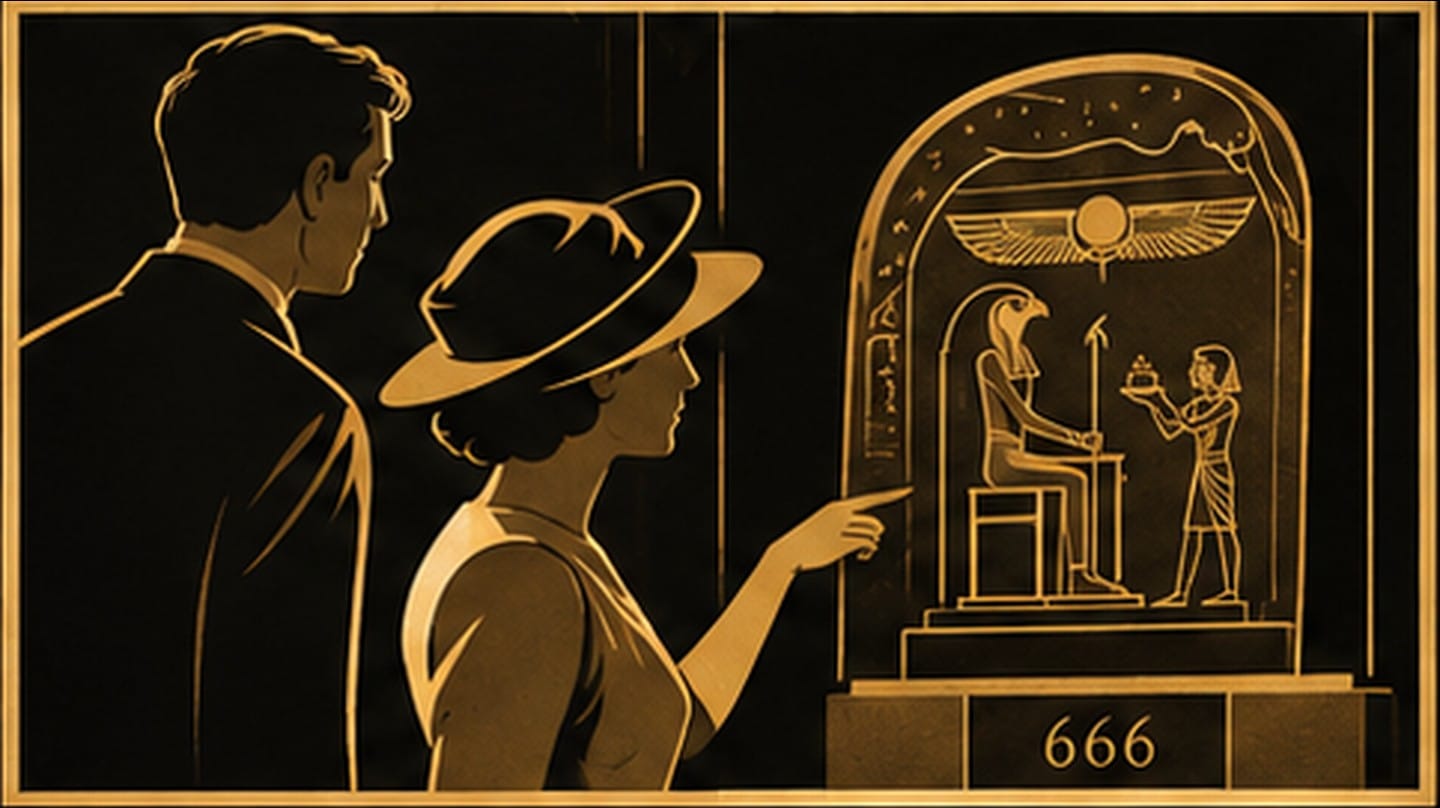
Crowley was skeptical. So he tested her. He quizzed her about Horus, and he says she answered correctly. Then he took her to the Boulak Museum and asked her to pick out an image of the god. She walked past several obvious ones, went upstairs, and pointed across a room at a small painted wooden stele.
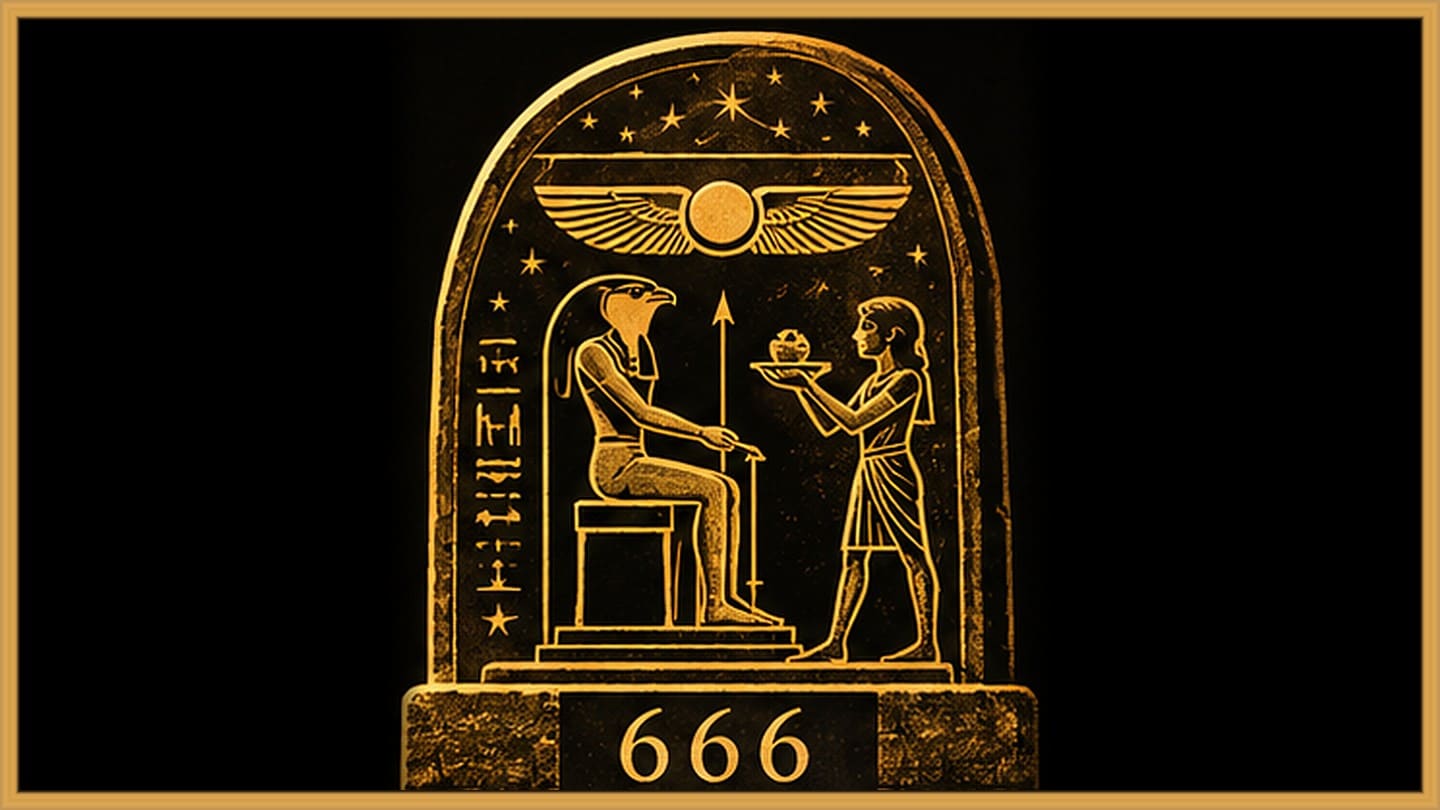
The museum inventory number on it was 666.
The Stele of Revealing
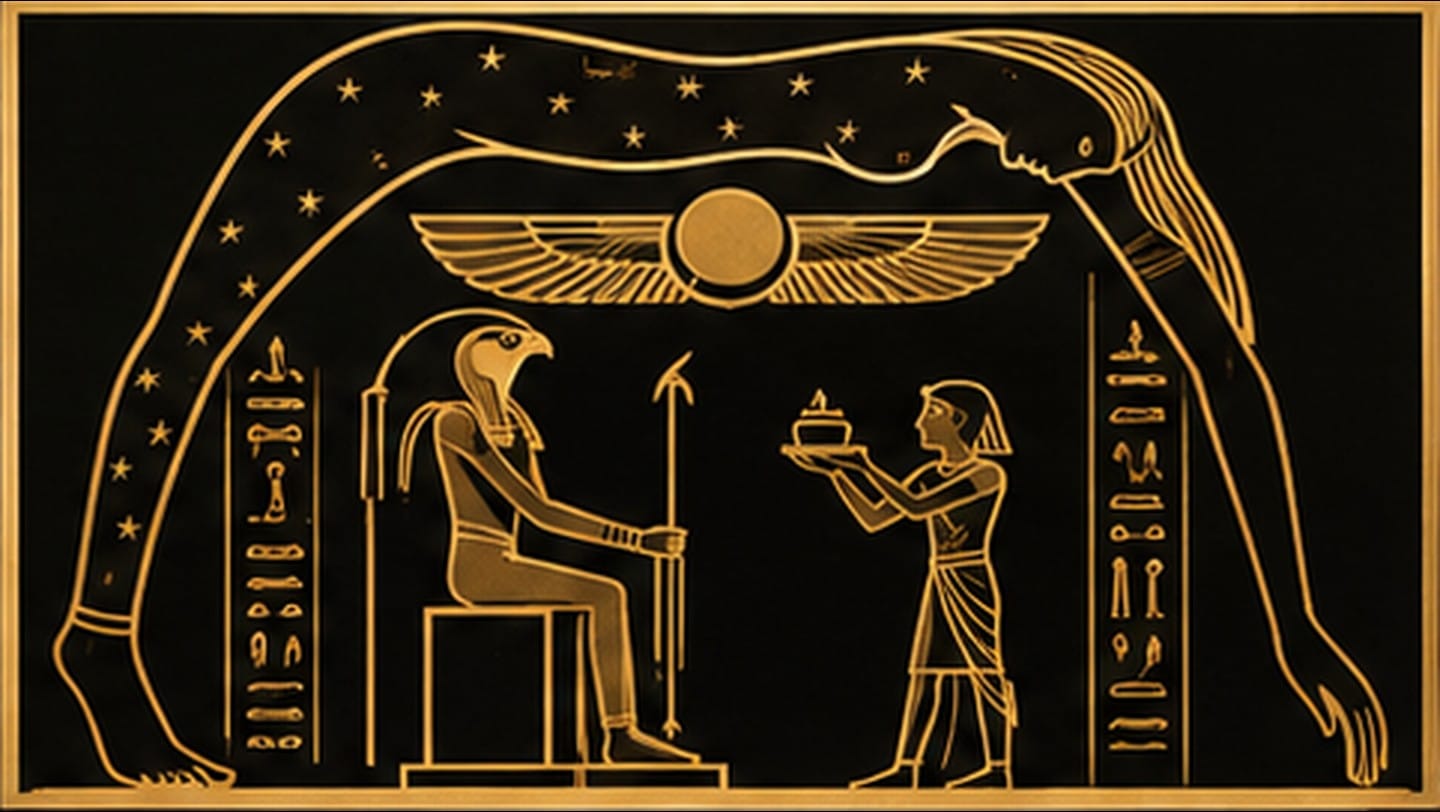
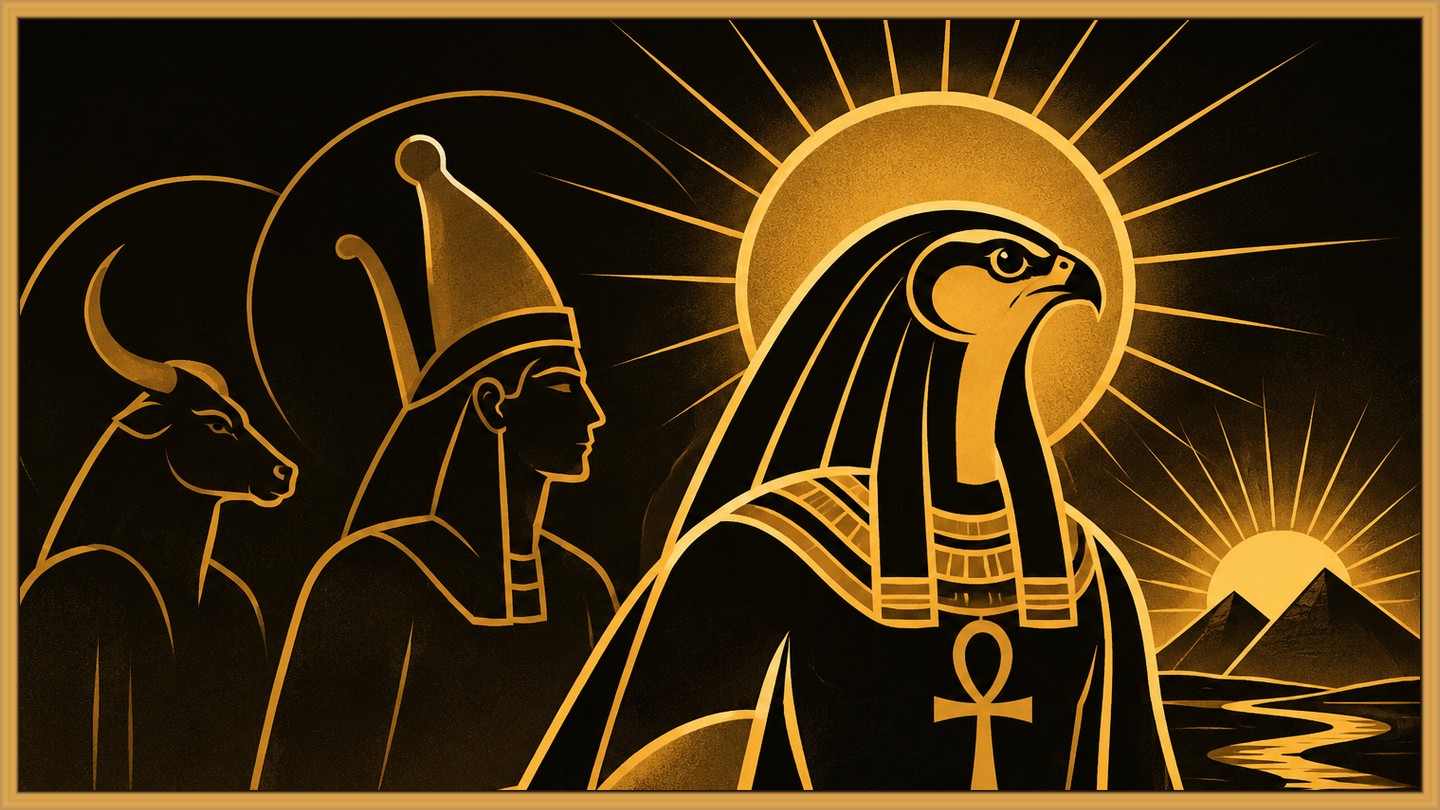
The object Rose pointed at was a funerary stele made for an Egyptian priest named Ankh-af-na-khonsu, a priest of the war god Montu at Thebes. It dates to around 680–670 BCE, the late 25th or early 26th Dynasty. On it, the sky goddess Nut arches over the whole scene, her body stretched across the top like the night sky. Below her is a winged sun disk. And seated on a throne is the falcon-headed Ra-Horakhty, a form of Horus, with the priest standing before him making an offering.
Crowley had the hieroglyphs translated, and the stele became what Thelemites call the Stele of Revealing. It was later catalogued as Cairo A 9422, and it’s now displayed at the Grand Egyptian Museum near the Pyramids of Giza. Those three figures became the three speakers of The Book of the Law: Nuit (chapter one), Hadit (chapter two), and Ra-Hoor-Khuit (chapter three). Bits of verse Crowley wrote from that translation even ended up inserted into the finished book. Rose then said the one speaking through her wasn’t Horus but his messenger, Aiwass, and on April 7th she told Crowley to sit in the “temple” at noon for three days and write down what he heard.
The Book of the Law
What came out of those three hours is short. It’s three chapters, 220 verses in the printed edition, and it’s one of the strangest documents of the twentieth century. It’s lyrical in places, menacing in others, and full of number puzzles and riddles that Crowley spent the rest of his life trying to solve.
It’s also where the famous lines come from:
“Do what thou wilt shall be the whole of the Law.” (Liber AL I:40)
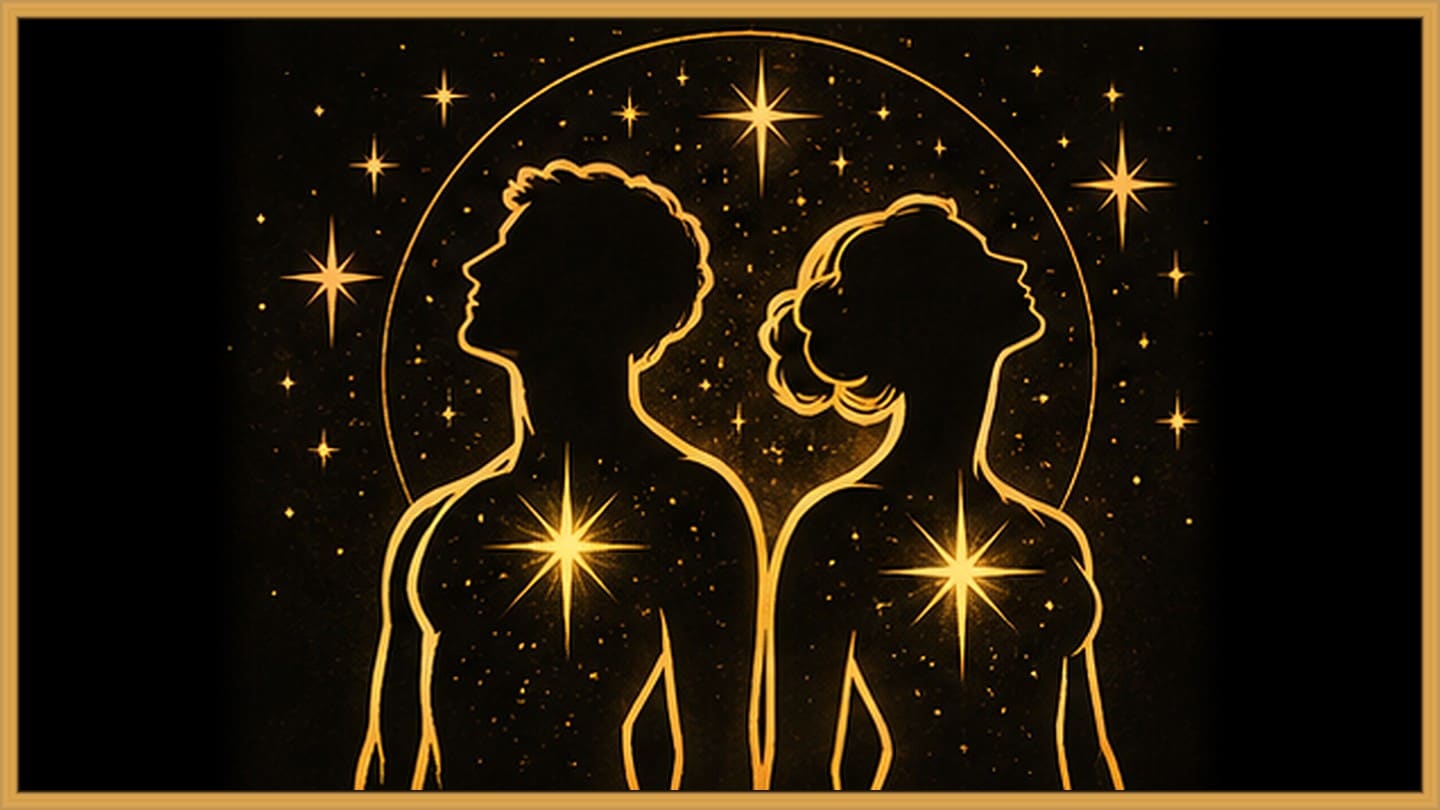
“Every man and every woman is a star.” (Liber AL I:3)
“Love is the law, love under will.” (Liber AL I:57)
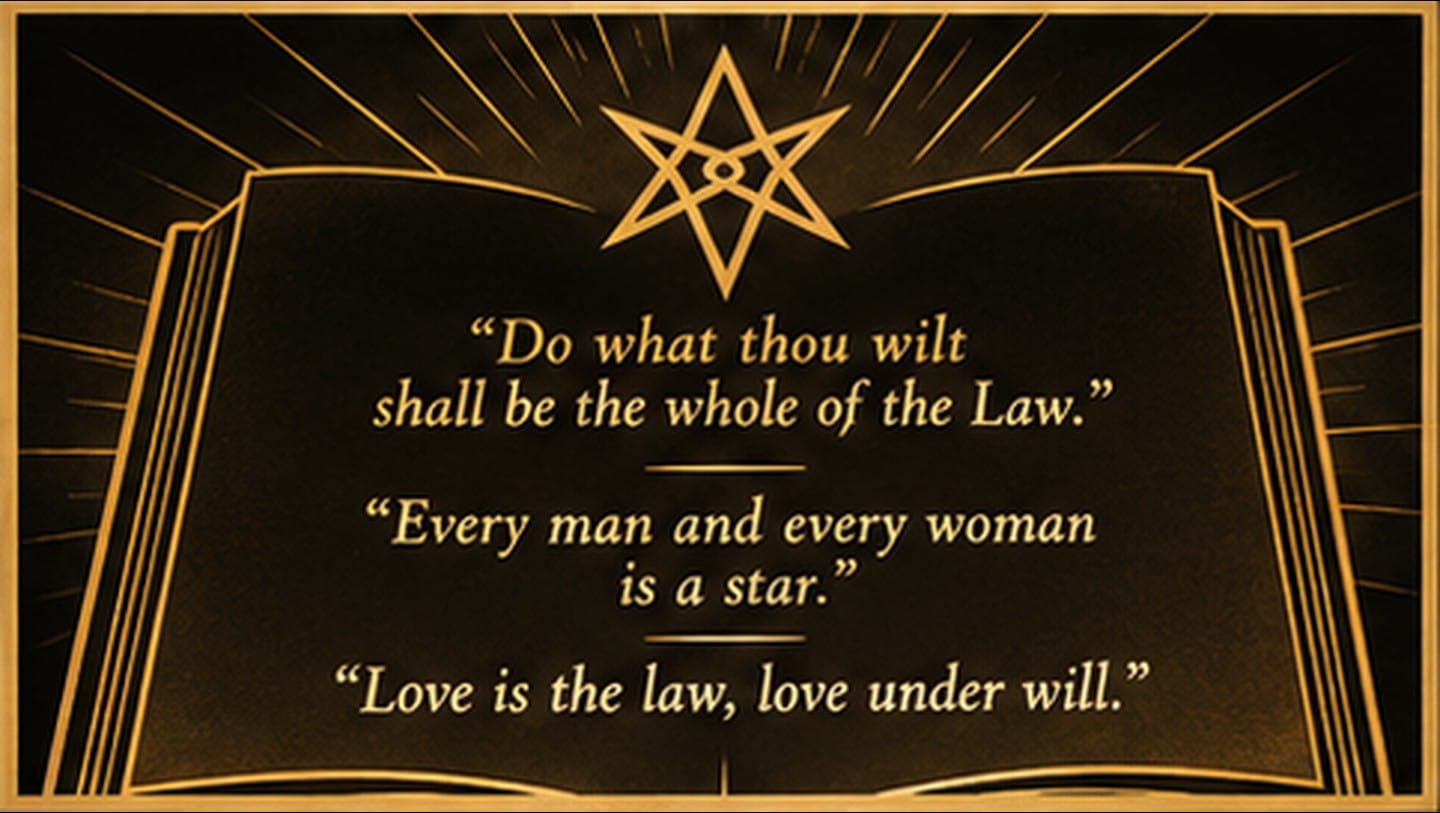
That first one is the line everyone knows, and almost everyone gets wrong. Crowley insisted it doesn’t mean “do whatever you feel like.” In Thelema, the system built on this book, “will” means your True Will, your real purpose, the course you’re actually meant to run, the way a star runs its orbit. The idea is less “anything goes” and more “find out what you’re for, and do that.”
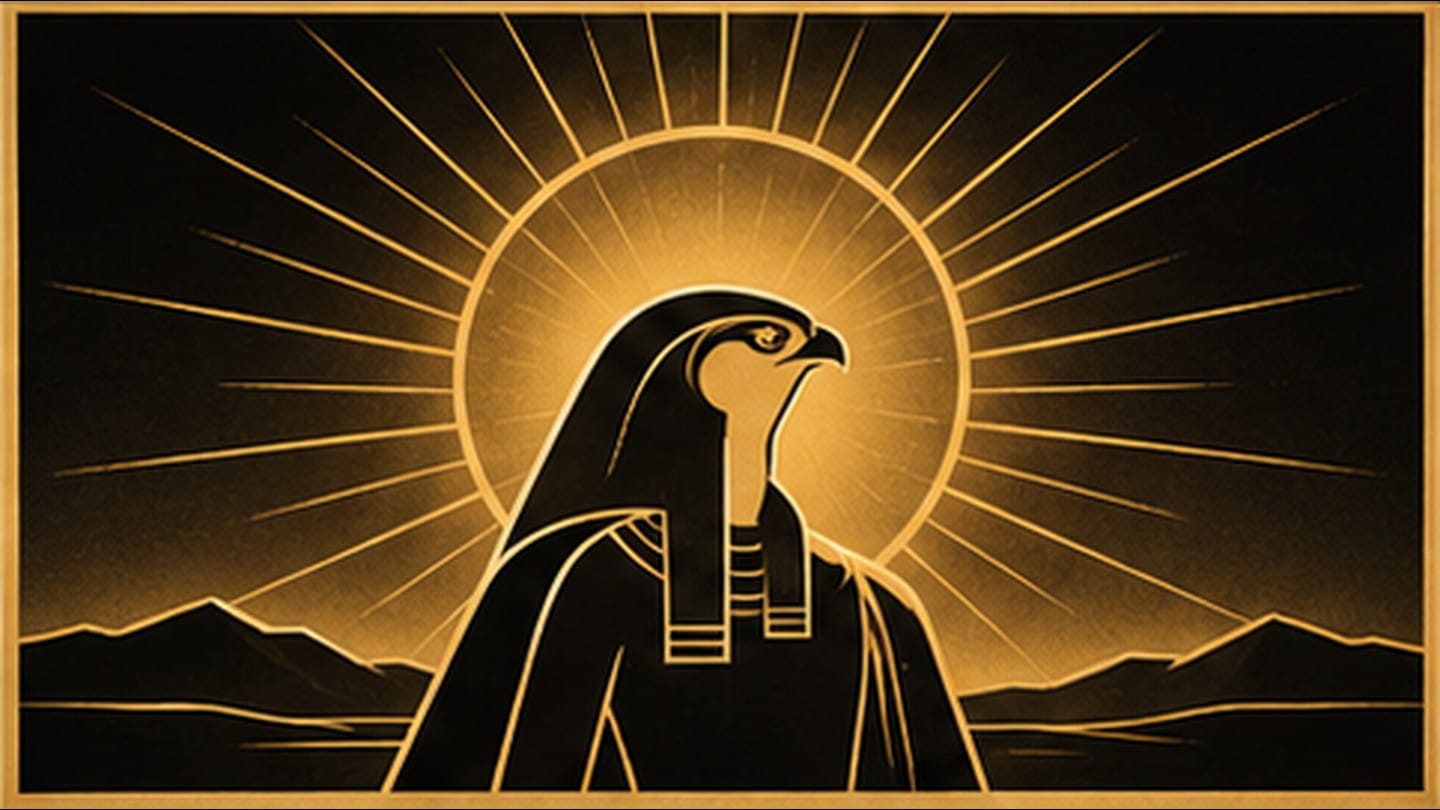
The book also announced a changing of the guard in heaven. Crowley read it as declaring that the old age was over, and that a new one, ruled by the Crowned and Conquering Child, Horus, had begun in 1904. That moment Crowley called the Equinox of the Gods, which became the title of his 1936 account of the whole story.
Isis, Osiris, Horus: The Aeons
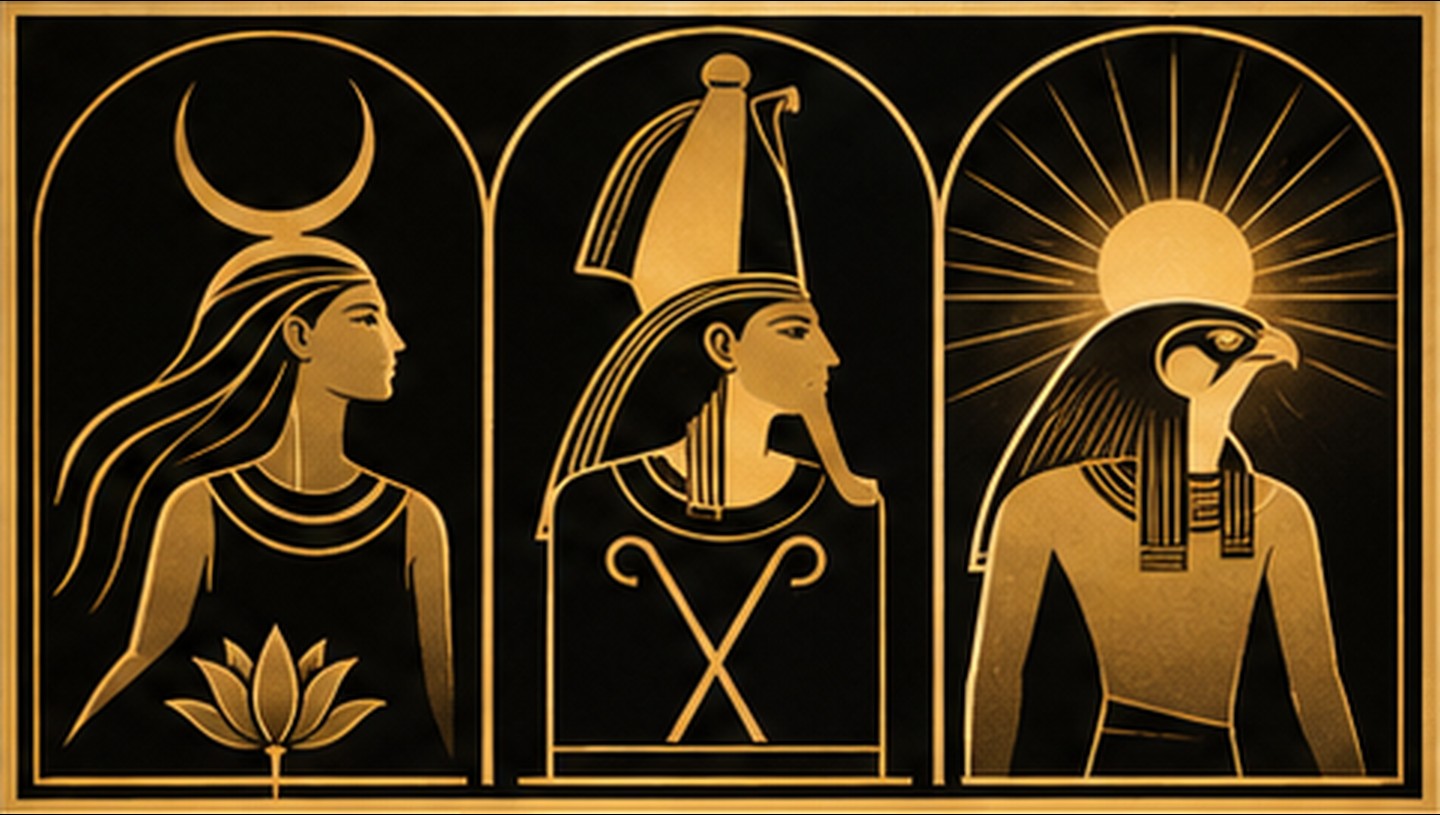
Here’s the framework, as Crowley laid it out.
Human history, he said, moves through great ages, or aeons, each with its own “magical formula,” its own deep idea of how the universe works.
- The Aeon of Isis was the age of the Mother. Crowley described it in The Equinox of the Gods as “simple, quiet, easy, and pleasant; the material ignores the spiritual.” Humanity saw life as flowing from the Great Mother, from nature and the earth.
- The Aeon of Osiris was the age of the Father, and of the dying god. Osiris is killed, torn apart and brought back. Crowley saw this formula of sacrifice, death and resurrection behind the religions of the last couple of thousand years, Christianity most of all. Truth came from outside you, through priests and scriptures, and you were something that needed saving.
- The Aeon of Horus is the age of the Child. Not a god who dies for you, but a child who grows. The focus moves inward, to the individual, to self-realization and to each person’s True Will.
And it doesn’t stop there. Crowley believed a future Aeon of Ma’at, named for the Egyptian goddess of truth and justice, would eventually follow. In his commentary on Liber AL III:34 he wrote that it might arise “a hundred or ten thousand years from now; for the Computation of Time is not here as There.” Hold on to that one. It’s going to cause trouble later.
Where Did the Idea Come From?
Even if you think Aiwass was real, the Aeon of Horus didn’t drop into an empty head. Crowley was soaked in ideas that make the framework look less like a lightning bolt and more like a storm that had been building for decades.
The Golden Dawn
In 1898 Crowley joined the Hermetic Order of the Golden Dawn, the famous Victorian magical society whose members included W.B. Yeats. The Golden Dawn’s rituals were full of Egyptian god-forms. Officers in its temples took on the roles of Egyptian gods, and in the order’s Equinox Ceremony the officer called the Hiereus took the god-form of Horus. When Crowley calls the Cairo event an “equinox of the gods,” he’s using the Golden Dawn’s own language, scaled up to the whole cosmos.
Precession and the Age of Aquarius
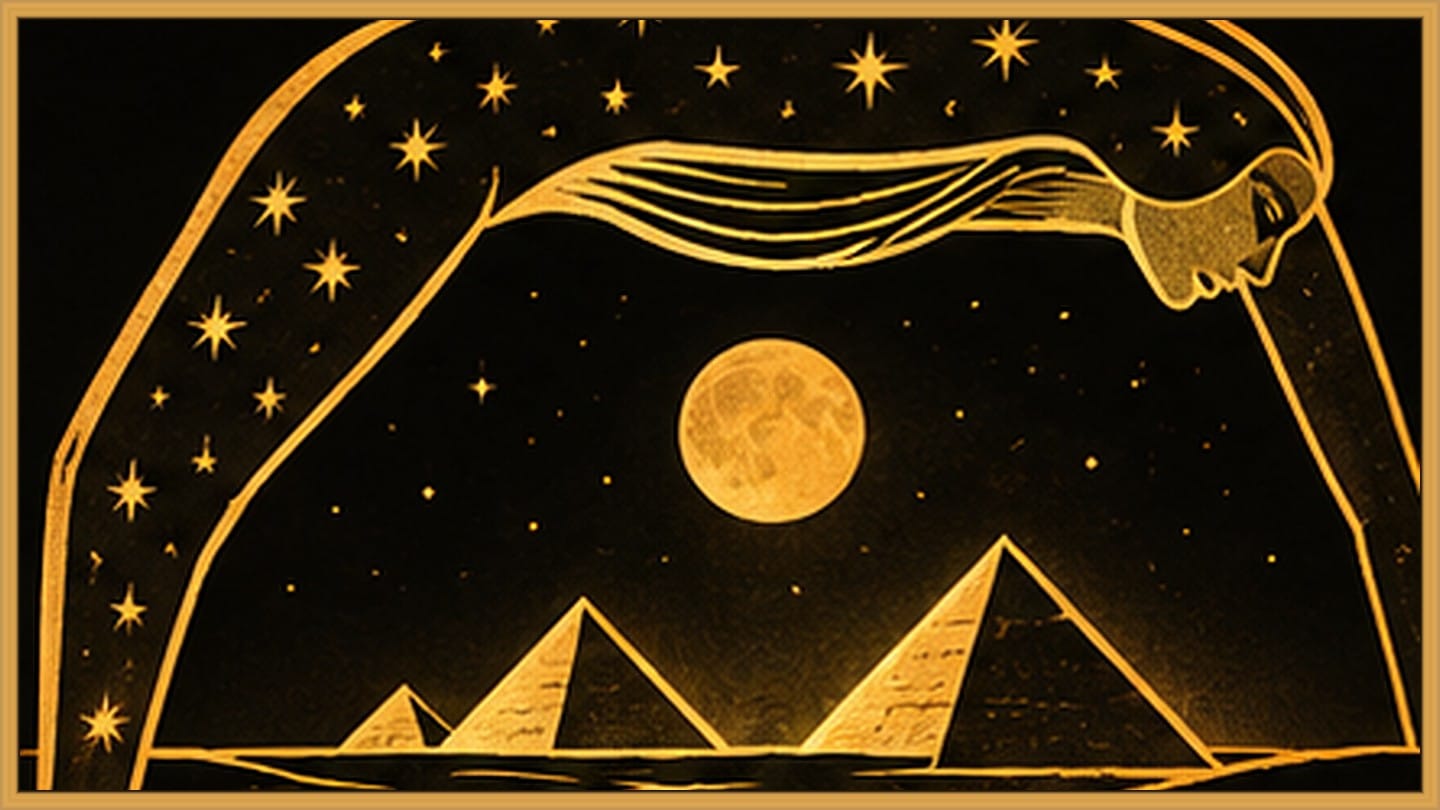
Then there’s astrology. Because the Earth wobbles on its axis, the point where the sun rises at the spring equinox slowly drifts backward through the zodiac, one sign about every 2,000-plus years. This is called precession of the equinoxes, and in the late 1800s and early 1900s occultists were already talking about the world moving out of the Age of Pisces and into the Age of Aquarius.
Blavatsky and Theosophy
And hovering over all of it is Helena Petrovna Blavatsky. Her Isis Unveiled (1877) and The Secret Doctrine (1888) gave the occult world a huge vocabulary of cosmic cycles, root races and the spiritual evolution of humanity through vast ages. Theosophy made it normal for occultists to think in terms of a whole species marching through spiritual eras, and to expect new teachers and new revelations to announce the next one. Crowley admired at least some of her work, and later wrote a commentary on her The Voice of the Silence. The idea of a new age arriving with a new world teacher was in the air he breathed.
A Prophet Who Hated His Own Prophecy
This is the part of the story I find the most interesting, because it doesn’t fit the con-man version very neatly.
Crowley didn’t like the book.
In his Confessions he wrote: “The fact of the matter was that I resented The Book of the Law with my whole soul. For one thing, it knocked my Buddhism completely on the head.” He said he was “bitterly opposed to the principles of the Book on almost every point of morality,” and that “the third chapter seemed to me gratuitously atrocious.”
So what did he do? He made a few copies, showed them to some friends, and then, by his own account, misplaced the manuscript. It sat forgotten for years. It wasn’t formally published until 1909, when it appeared in ΘΕΛΗΜΑ, a collection of his holy books. Only later did Crowley throw himself into it as his life’s mission.
And the manuscript has its own ghost story. When Crowley died in 1947, the original handwritten pages went to his successor, Karl Germer. After Germer died, they vanished. Then in 1984 a man named Tom Whitmore was cleaning out the basement of a house he had bought in Berkeley, California. Under old mattresses and lumber, he found boxes of papers, and in one of them an envelope holding the manuscript of The Book of the Law. He gave it to the O.T.O.
Different Takes on the Aeon
Once a book declares a new age, people are going to fight over what it means. Here are the big camps.
Thelema and the O.T.O.
For Thelemites, especially in Ordo Templi Orientis (the O.T.O.) and the A∴A∴, the Aeon of Horus is the literal spiritual reality of our time. 1904 is Year 0 of a new era, and Thelemites still date things by it. The work of the Aeon is finding and doing your True Will. Since 1925, printings of the Book have carried a short note called “The Comment,” which Crowley signed in the name of Ankh-af-na-khonsu, saying in effect that each person should interpret the book for themselves and not argue about it. That’s why there’s no one official reading.
Kenneth Grant and the Typhonian Current
Kenneth Grant, who worked as Crowley’s secretary as a young man, went somewhere much darker and stranger. In books starting with The Magical Revival (1972), he tied Crowley’s work to older “Typhonian” currents, star lore, Lovecraft’s fiction and what he called extraterrestrial or “trans-plutonian” intelligences. In Grant’s version, the Aeon of Horus is less a neat new chapter in history and more a door that opened onto things very old and very outside.
Frater Achad and the Aeon of Ma’at
Then there’s Charles Stansfeld Jones, known as Frater Achad, a Canadian student whom Crowley at one point hailed as his “magical son.” Jones believed he had found a key to the Book of the Law in the number 31, and Crowley was thrilled. Later, though, Achad went his own way. He came to believe that the Aeon of Ma’at, the age of truth and justice that Crowley had put far in the future, had already begun or was overlapping with the Aeon of Horus. In the late twentieth century the American magician Nema carried that torch, with Maat Magic (1995) and the idea of a “double current” running alongside Horus. So inside Crowley’s own lineage, people were arguing that his new age was already ending.
Chaos Magic
In 1978 two British occultists, Peter J. Carroll (author of Liber Null) and Ray Sherwin (The Book of Results), founded the Illuminates of Thanateros and launched chaos magic. They took a different approach. Chaos magic treats belief itself as a tool. You can pick up a god, a system or an aeon, use it, and set it down. From that angle, the Aeon of Horus is a powerful working myth, not a cosmic fact. That’s a very Horus-age thing to do, in a way, since the individual magician is put above any one system, including Crowley’s.
The Psychological Reading
Israel Regardie, who was also once Crowley’s secretary and later became a therapist, read the whole thing psychologically. In The Eye in the Triangle he treated the Book as coming out of Crowley’s own psyche, drawing on Freud and Jung to argue that people have kinds of knowledge and power they aren’t aware of. Later, introducing The Law Is for All, he said that in the end it didn’t really matter whether the book came from a superhuman Aiwass or from the creative depths of Crowley himself. Either way, Regardie thought, Crowley had become a mouthpiece for the spirit of his age.
Christian Critics
And then there are the people who look at all of this and see something much darker. Many Christian writers point to the obvious: a man who called himself the Great Beast, a stele numbered 666, a spirit voice declaring the end of the Christian age. To them, the Aeon of Horus is a counterfeit revelation, a spirit openly announcing war on Christianity, and “Do what thou wilt” is the oldest temptation in the book in new clothes. You don’t have to share that view to see why someone would hold it. The Book of the Law’s third chapter really is hostile to Christianity, and Crowley himself called it “gratuitously atrocious.”
Could It Be Real?
So let’s take it seriously for a minute. What would someone point to if they wanted to argue that something genuinely happened in Cairo?
Crowley’s resistance. If you’re forging a holy book to make yourself a prophet, you don’t usually then hate it, lose it and leave it in a drawer for years. Biographer Lawrence Sutin, who is no believer, looked at Crowley’s private diaries and found they fit his public account.
The puzzles. Crowley argued that “no forger could have prepared so complex a set of numerical and literal puzzles” as he later found in the text. Believers point to the number play across the book, and to the strange grid page in the manuscript, the one with a line drawn through it and a circled cross, which the book says hides “mysteries that no Beast shall divine.” In 1976, James Lees claimed to have found the “order & value of the English Alphabet” the book asks for, and an entire system called the English Qaballa grew out of it.
The Skeptics’ Case
Now the other side, and it’s strong.
It sounds like Crowley. Scholar Joshua Gunn, in Modern Occult Rhetoric (2011), argued that the style of The Book of the Law is simply too close to Crowley’s own poetry, with the same imagery, the same overwrought flourishes, to be anything but his. Crowley’s answer was that his other inspired books were polished and perfect while The Book of the Law wasn’t, and he “dared nowise to lay claim to have touched” it. That’s a striking argument, but it’s still Crowley vouching for Crowley.
Rose may not have been so innocent. Regardie pointed out that the couple had been married for about eight months by then. Crowley talked constantly about his ideas, so Rose could easily have picked up a good deal about Horus and the Qabalah just from living with him. Sutin also noticed that Crowley gives two different timelines, and in one of them he performed an invocation of Horus before he quizzed Rose. That ritual described Horus in detail, which could have handed her the answers.
The story was told after the fact. Most of what we know comes from Crowley’s own later accounts, especially The Equinox of the Gods, published more than thirty years afterward. In his early notes he called the Book an “excellent example of automatic writing,” the kind of thing spiritualists of the time produced all the time. Only later did he insist it was a real, outside voice.
Crowley’s own doubts. And Crowley himself admitted, in The Equinox of the Gods, that “certain very serious questions have arisen with regard to the method by which this Book was obtained.” He then insisted the doubts were cleared up by studying the text. Still, it’s telling that the prophet felt he had to argue the case.
The fair summary? There’s no evidence that can settle whether a voice spoke in that room. What can be said is that every piece of The Book of the Law has a plausible source in Crowley’s head, his reading and his world, and that Crowley himself never stopped believing it came from somewhere else.
Did the World Actually Change?
Here’s where it gets eerie, because whatever you think about Aiwass, the idea of the Aeon of Horus seems to have gotten loose.
Parsons, Hubbard and the Babalon Working
In the 1940s, the rocket scientist Jack Parsons, a co-founder of the Jet Propulsion Laboratory, led the O.T.O.’s Agape Lodge in Pasadena. In 1946 he carried out a series of rituals known as the Babalon Working, meant to bring into the world the goddess figure from The Book of the Law, and his partner in it was a young science-fiction writer named L. Ron Hubbard. Hubbard would go on to found Dianetics and Scientology. Crowley, hearing about it from England, was not impressed. He wrote to Karl Germer: “Apparently Parsons or Hubbard or somebody is producing a Moonchild. I get fairly frantic when I contemplate the idiocy of these louts.” (As quoted in Russell Miller, Bare-Faced Messiah, ch. 7.) It’s one of the strangest crossovers in American history: rocketry, Thelema and the birth of a new religion all in one house in Pasadena.
The 1960s Counterculture
By the 1960s, the Book’s ideas had escaped the occult lodges entirely. The decade’s whole mood was about throwing off inherited authority, church, state and parents, and living by your own inner truth. Whether or not most people had read a word of Crowley, “do what thou wilt” sounded like a slogan written for them. Crowley was even in the picture: his face is in the crowd on the cover of The Beatles‘ Sgt. Pepper’s Lonely Hearts Club Band (1967).
Rock and Roll
Jimmy Page of Led Zeppelin became one of the best-known Crowley collectors in the world. On early pressings of Led Zeppelin III (1970), engineer Terry Manning etched “Do what thou wilt” into the vinyl on one side and “So mote it be” on the other. The next year, 1971, Page bought Boleskine House, Crowley’s old home on the shore of Loch Ness.
David Bowie name-checked him too. On “Quicksand,” from Hunky Dory (1971), Bowie sings, “I’m closer to the Golden Dawn / Immersed in Crowley’s uniform of imagery.” After that, Crowley imagery runs through heavy metal and beyond.
The Modern Occult Revival
Historian Wouter Hanegraaff, in Western Esotericism: A Guide for the Perplexed, notes how The Book of the Law has inspired interpretations and adaptations across modern esoteric movements. Gerald Gardner, the founder of modern Wicca, met Crowley in May 1947 and was admitted into the O.T.O., and historian Ronald Hutton has traced Crowley material in Gardner’s early rituals.
The Age of the Individual
And then there’s the biggest claim of all: that the Aeon of Horus is simply the world we live in now. Personal truth, “follow your purpose,” faith moving from the pew to the private search. You don’t have to believe a word came from Aiwass to notice how much the century after 1904 looked like what that voice described. Regardie’s answer was that Crowley was a mouthpiece for the spirit of the age. The question is just whose mouthpiece.
So What Happened in That Room?
Maybe Aiwass was a messenger from beyond. Maybe he was the deepest part of Crowley, speaking in a voice Crowley couldn’t recognize as his own. Maybe he was a story Crowley told so well that he came to believe it. Or maybe he was something that didn’t care which of those we pick.
What isn’t up for debate is that a three-hour dictation in a honeymoon flat became the seed of a religion, a lineage of magicians, a rocket scientist’s ritual, an album cover, a groove in a vinyl record and a phrase people still argue about every day. If the Aeon of Horus is real, we’re living in it. And if it isn’t, it’s one of the most successful stories anyone has ever told about the future.
Sources and Further Reading
- Aleister Crowley, The Book of the Law (Liber AL vel Legis) (1904; first pub. 1909), Wikisource
- Aleister Crowley, The Equinox of the Gods (1936), chs. 6–8
- Aleister Crowley, The Confessions of Aleister Crowley (Arkana, 1989), chs. 49–50
- “The Book of the Law,” Wikipedia
- “Aeon (Thelema),” Wikipedia
- Lawrence Sutin, Do What Thou Wilt: A Life of Aleister Crowley (St. Martin’s, 2000)
- Richard Kaczynski, Perdurabo: The Life of Aleister Crowley (rev. ed., North Atlantic, 2010)
- Israel Regardie, The Eye in the Triangle (Falcon, 1970)
- Henrik Bogdan, “Envisioning the Birth of a New Aeon,” in Bogdan & Starr (eds.), Aleister Crowley and Western Esotericism (Oxford, 2012)
- Joshua Gunn, Modern Occult Rhetoric (University of Alabama Press, 2011)
- Kenneth Grant, The Magical Revival (Muller, 1972)
- “Stele of Ankh-ef-en-Khonsu,” Wikipedia
- “Chaos magic,” Wikipedia
- Russell Miller, Bare-Faced Messiah (1987), ch. 7
- “How Led Zeppelin III was their most misunderstood album,” Louder
- “From Man to Witch: Gerald Gardner 1946–1949,” geraldgardner.com
- Nema, Maat Magic (Weiser, 1995)
- Peter J. Carroll, Liber Null (1978)
- Wouter J. Hanegraaff, Western Esotericism: A Guide for the Perplexed (Bloomsbury, 2013)
- Ronald Hutton, The Triumph of the Moon (Oxford, 1999), on Gardner and Crowley
0 Comments